Clean Air, Safer Dust: Nederman’s Integrated System at Berlin Gardens
When one of North America’s fastest-growing outdoor furniture manufacturers committed to upgrading its aluminum production environment, it partnered with Nederman to build a system worthy of the people who show up every day to make the products.
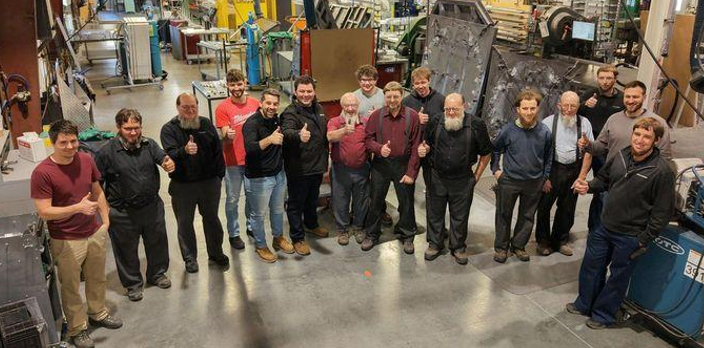
Berlin Gardens was founded in 1988 in the heart of Ohio’s Amish country on a simple idea: taking life outdoors. Under owner Sam Yoder, who acquired the company in 2009, it has grown from fewer than 20 employees to more than 230—becoming one of North America’s premier manufacturers of poly and aluminum outdoor furniture.
That growth brought responsibility as well as opportunity. When it came to the working environment inside the shop, Berlin Gardens chose to invest—and the results have been felt across safety, efficiency, and the daily experience of everyone on the floor.
As Berlin Gardens’ aluminum production grew, weld fumes, aluminum chips, and dust became a daily pain point for time, safety, and potential compliance around combustible aluminum particulates. Nederman responded with an integrated air management system engineered around the entire facility, addressing three core applications: robotic and manual weld fume extraction, centralized high‑vac housekeeping, and safe handling of combustible aluminum dust.
These applications together make the installation unique:
Robotic weld fume capture using fully enclosed modular hoods.
Facility‑wide housekeeping engineered around 18 high‑vac connection points.
Combustible aluminum dust handled with a system designed for spark and explosion mitigation.
Weld Fume Control: One System, Two Applications
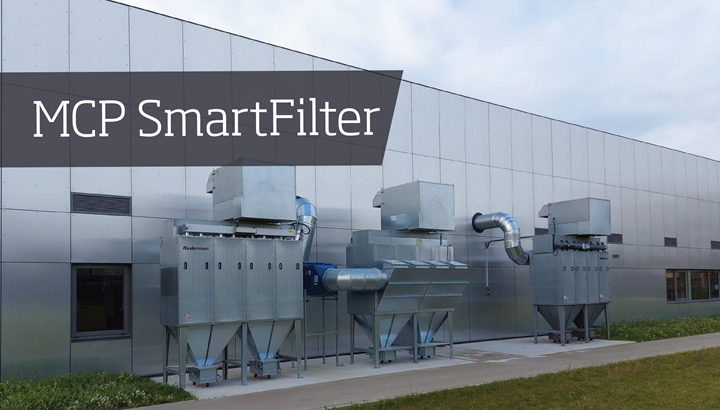
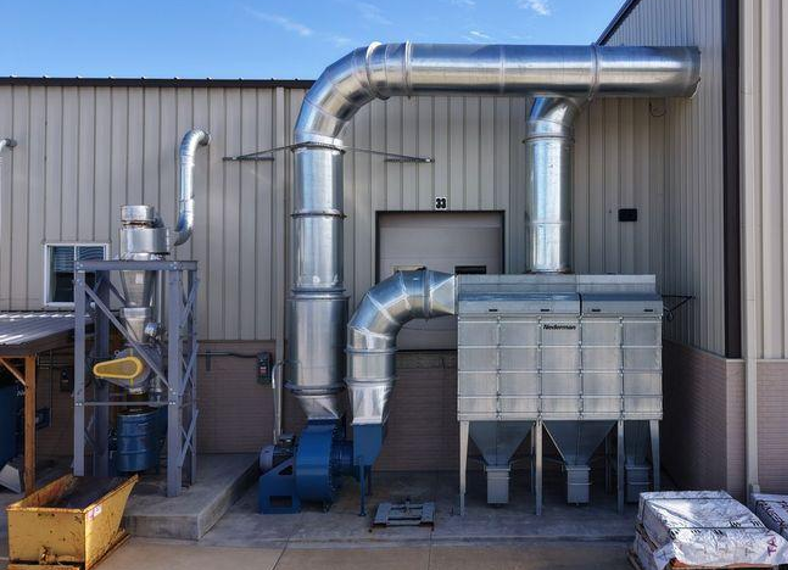
Nederman approached robotic and manual welding as distinct applications within a single central fume extraction system: an MCP SmartFilter with Combifab fan providing 17,000 CFM and demand‑responsive control, with room for future expansion.
Manual welding: Integrated Source Capture with Extraction Arms
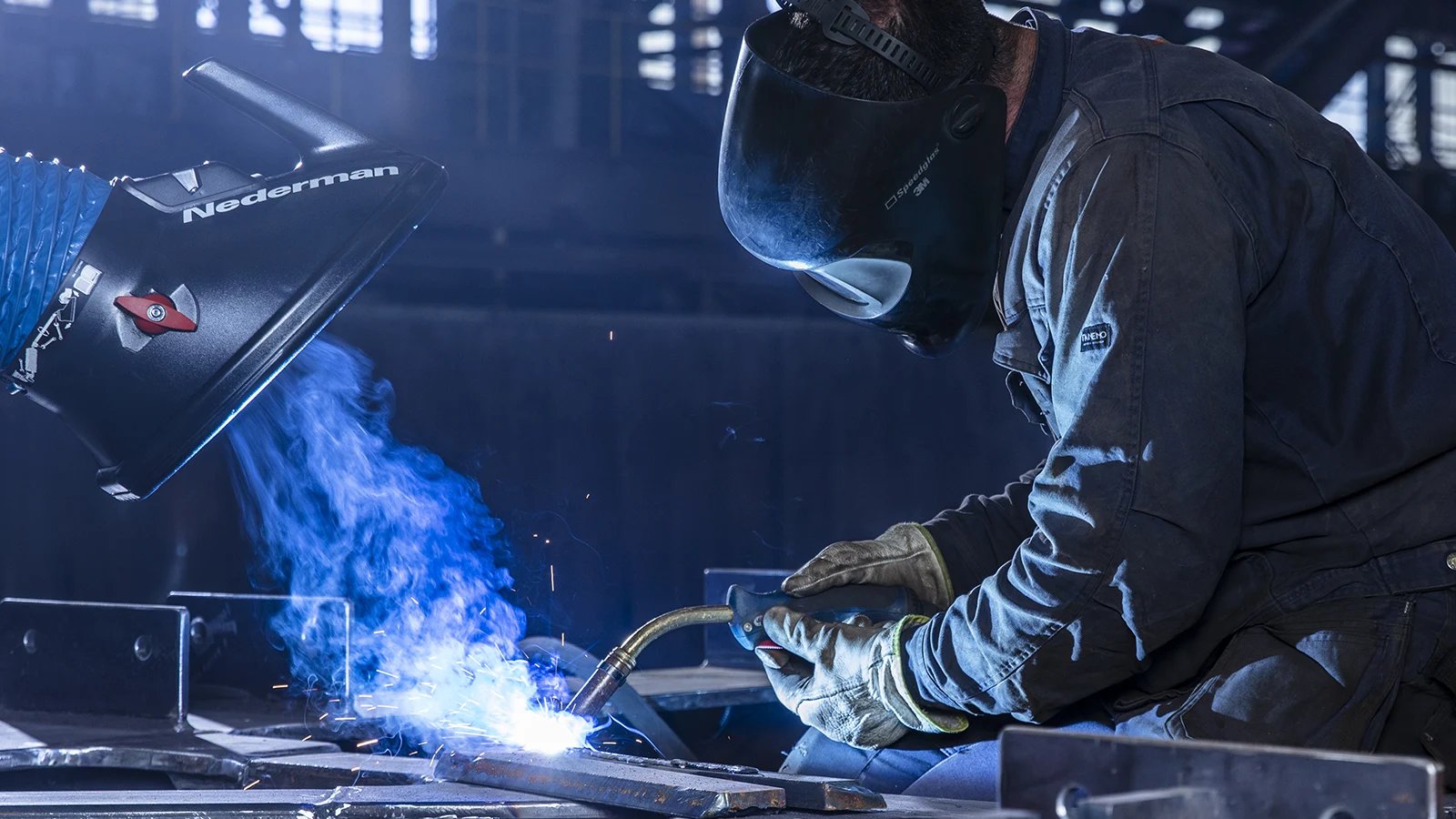
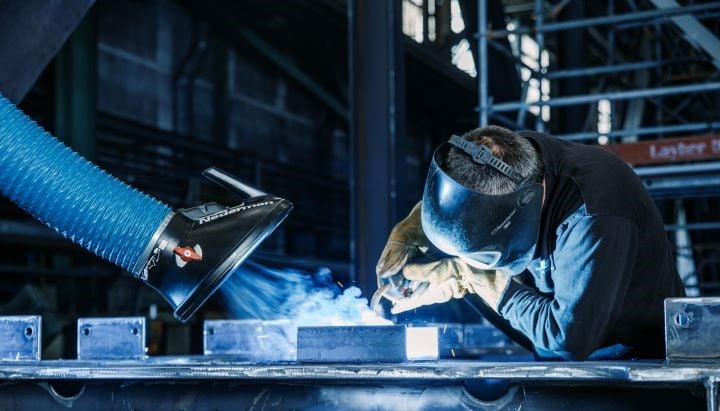
Seven 10-foot extraction arms are installed at manual welding stations, providing welders with direct, source-level fume capture. The flexible arms can be easily repositioned to accommodate changes in weld location, part size, or geometry, helping maintain effective and ergonomic fume extraction throughout the welding process.
Rather than operating as standalone units, these extraction arms are fully integrated into the overall weld fume extraction system. This unified approach allows both manual and robotic welding operations to share the same infrastructure and benefit from the central system's demand-responsive design, ensuring efficient fume control across the facility.
Robotic welding: modular hoods for controlled capture
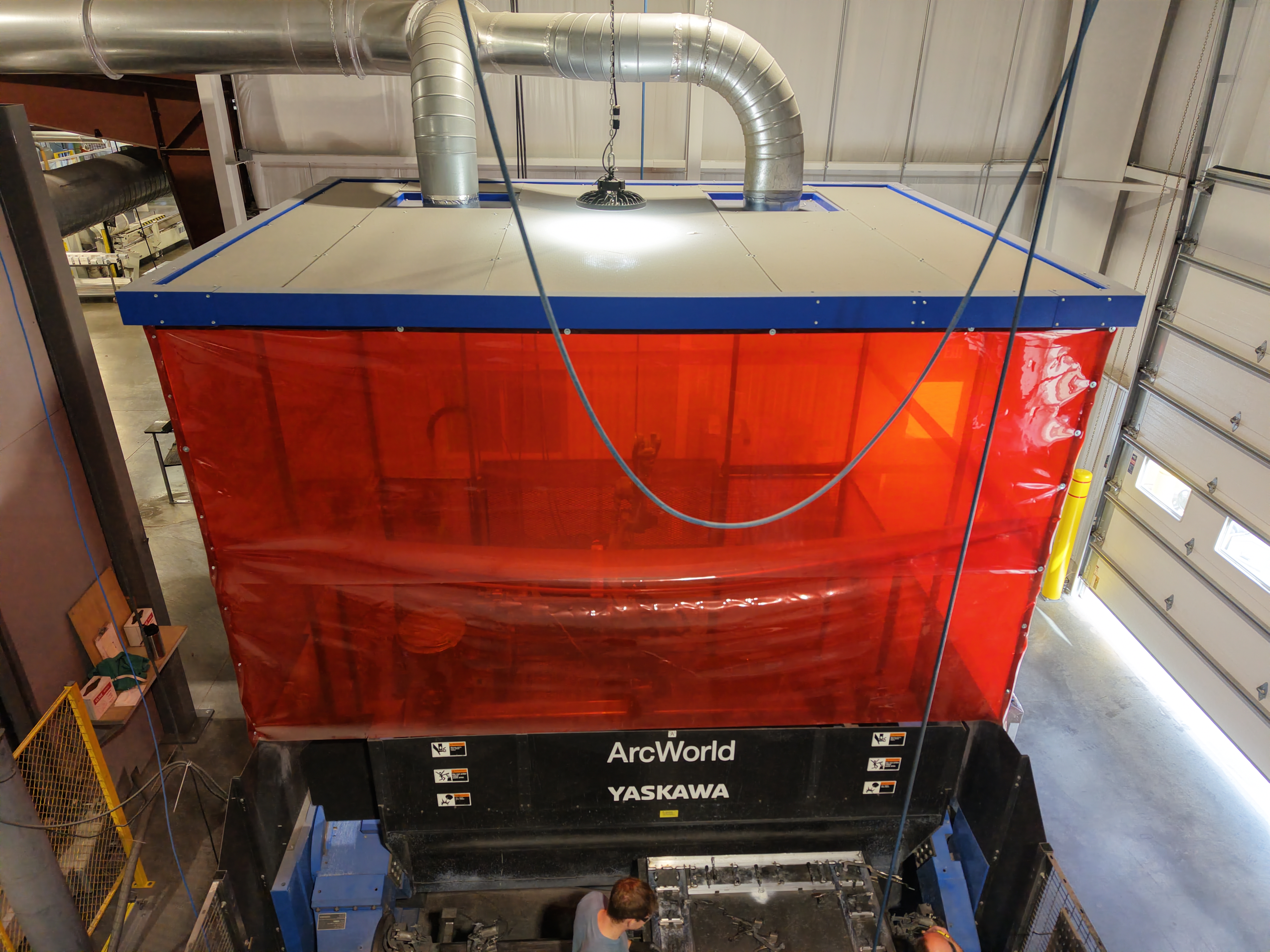
Unlike manual welding, robotic welding requires application‑specific capture strategies because the robot moves through changing positions and angles. Fixed capture points struggle to keep pace with that motion. Nederman’s solution uses fully enclosed 15′ x 15′ modular hoods over each robot cell, connected through auto gates to the central system. This creates a controlled environment around each robot and a more efficient, stable capture approach than traditional source capture alone, making the robotic welding solution one of the most distinctive aspects of the project.
Central High‑Vac Housekeeping: Engineered Around the Facility
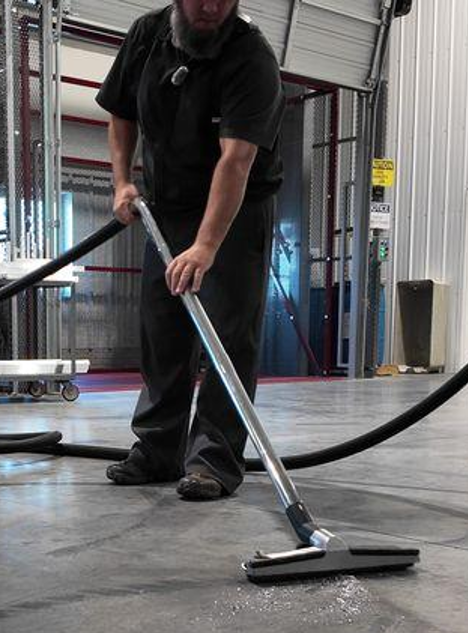
Nederman’s central high‑vacuum system is engineered as a facility‑wide housekeeping infrastructure, collecting aluminum dust waste material throughout 18 connection points around the plant and TAV valves with switches at each hose for automatic start/stop at the point of use. This positions housekeeping as a plant‑level solution rather than a collection of portable vacuums and manual sweeping. The high-vacuum system also maintains cleanliness in the powder coating operations.
Clean-Up Time Reduced by 75%
The new aluminum dust collection and housekeeping system has reduced cleanup time by approximately 75%, cutting the time required to remove aluminum chips and dust from 15 to 20 minutes down to roughly five minutes per team member. This significant time savings returns valuable labour hours to production each day, allowing employees to focus on higher-value manufacturing activities rather than housekeeping tasks. In addition to improving productivity, aluminum dust is now managed through a dedicated system designed for combustible dust safety and compliance, replacing manual sweeping practices with a safer, more effective, and compliant solution. The result is a cleaner work environment, improved operational efficiency, and labour reallocated from cleanup to production.
Powder Coating: Housekeeping That Protects Finish Quality
In the powder coating area, Nederman’s Hi‑Vac central vacuum system replaces sweeping and blowing, which recirculate fine powder and increase airborne exposure. The system:
Replaces manual sweeping and blowing as the primary cleanup method.
Captures powder at a central point to keep airborne exposure low.
Supports more consistent finish quality and reduced rework by limiting stray contamination in the coating process.
By positioning housekeeping in powder coating as a contributor to both operational efficiency and product quality, the installation treats cleanliness as a production parameter, not just a housekeeping metric.
Combustible Aluminum Dust: Safety by Design
Aluminum chips and particles generated at the three cutting saws require application-specific source capture designed for the combustible characteristics of the material and applicable safety requirements. Separate from the facility’s high-vacuum housekeeping system, Nederman’s low-vacuum, high-air-volume solution captures material directly at the cutting machines using a cyclone, fan, and CARZ valve. This process-specific design supports effective material collection and appropriate combustible dust safety measures in the machining area.
Ease of Operation: Built Into the Whole Solution
Although the solution includes weld fumes, combustible dust, and housekeeping, daily operation remains simple. Operators start the system with a straightforward push‑button sequence, and the HMI provides intuitive insight into status across all connected applications, with minimal maintenance and low operator involvement over more than two years of operation.
By building ease of use into the weld fume, housekeeping, and dust collection system from the start, Nederman has helped Berlin Gardens make cleaner air, safer combustible dust control, and faster housekeeping a standard part of running the plant, not a burden on the people who keep it moving.