Extraction systems: The ROI explained
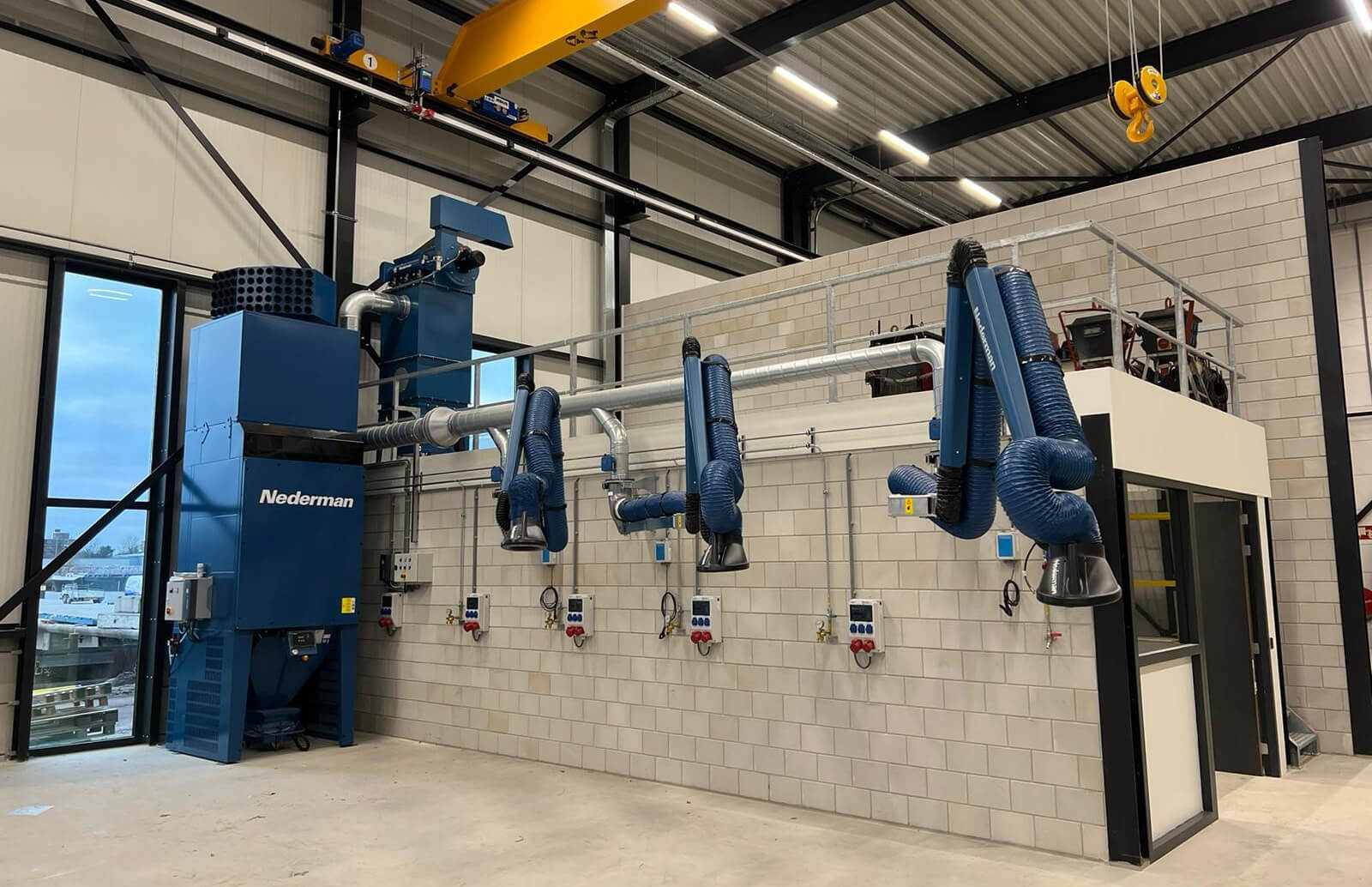
Extraction and filtration systems are often viewed as a necessary investment for workplace safety and regulatory compliance. While these are important considerations, many manufacturers overlook the wider return on investment (ROI) these systems can deliver.
When properly designed and maintained, extraction systems can provide measurable returns through increased productivity, reduced energy consumption, improved compliance and lower operational costs, regardless of the contaminant they're dealing with.
For manufacturers operating in sectors such as woodworking, metal fabrication, automotive servicing, machining and food production, the question is no longer whether extraction is needed, it’s a requirement that is monitored and enforced by the HSE. It's whether your current system is delivering the maximum return on investment.
The universal ROI case
Whatever the contaminant, the mechanics of the ROI case are consistent.
Productivity starts with cleaner air
Airborne contaminants don't just create a health risk; they can settle on machinery, products and work surfaces, leading to increased cleaning requirements, equipment downtime and maintenance costs. In some cases, contamination can even affect product quality and result in costly rework or waste. Capturing contaminants at source prevents these issues before they occur: employees work in a cleaner environment, safe from the risks of potentially toxic particulate inhalation or skin exposure. Machinery stays operational for longer, and production interruptions are reduced.
The cost of non-compliance keeps rising
Health and safety regulations surrounding airborne contaminants continue to evolve, and businesses are under increasing pressure to protect employees from harmful exposure. Some contaminants also create combustible atmospheres, introducing fire or explosion risk if not managed correctly. Failure to comply can result in fines, enforcement notices, reputational damage, and costly operational disruption. A properly engineered system helps businesses meet workplace safety requirements while reducing the financial and operational risks of non-compliance.
Energy savings deliver long-term value
Older or poorly designed systems can consume significant amounts of energy, particularly when large volumes of air are moved unnecessarily. Modern systems maximise capture efficiency while minimising energy consumption, extracting contaminants directly at source reduces the volume of air that needs to be handled, and automated airflow controls can further optimise performance by adjusting operation based on demand. Over time, these savings make a significant contribution to overall ROI, particularly in facilities running multiple shifts or large-scale production.
Read how Tiflex reduced their energy costs with a Nederman SAVE optimised dust extraction system
ROI by contaminant type
The universal principles above play out differently depending on what you're extracting. Here's where the ROI case gets specific.
Dust extraction ROI
Dust generated through woodworking, composites machining and food production present their own risk profile. Beyond respiratory health, certain dusts create combustible atmospheres, meaning uncontrolled dust isn't just a cleaning problem but a fire and explosion risk, which is why systems handling combustible dust are often designed to meet DSEAR and ATEX requirements.
There's also a recovery angle unique to dust: captured material can frequently be recycled or repurposed. Wood waste, for example, can be processed into pellets for energy generation or resale, turning what would otherwise be a disposal cost into an additional revenue stream.
Typical industries: woodworking, composites, food production.
Explore our dust extraction and filtration solutions
Fume extraction ROI
Fume from welding, cutting and other thermal processes carries a different exposure profile, governed by COSHH exposure limits for metal fume and particulates. Because welding fume exposure is linked to respiratory and, in some cases, long-term health conditions, the compliance stakes are high and because welding happens across so many industries rather than being confined to one, the ROI case here is really about protecting people in a process, not a single sector.
Effective fume capture at the point of work through extraction arms or on-tool solutions keeps fume out of the wider workspace, reducing both exposure risk and the ambient cleaning burden on the rest of the facility.
See our welding fume extraction solutions
Automotive and exhaust extraction ROI
Vehicle workshops face a specific extraction challenge: capturing exhaust gases at the tailpipe before they build up in an enclosed space. Beyond the immediate health risk of carbon monoxide and other exhaust gases, poor extraction in an automotive setting can affect technician comfort and productivity over a full shift, and non-compliance carries the same enforcement risk as any other workplace air quality failure.
Direct-capture exhaust extraction systems, hose reels and rail-mounted capture arms as some common examples, are typically simpler to specify and install than general workspace ventilation, and deliver a fast, visible ROI because the source point is fixed and predictable.
Typical industries: automotive servicing and repair workshops.
Explore our automotive and exhaust extraction solutions
Oil mist extraction ROI
Machining and metalworking processes that use cutting fluids generate oil mist, which behaves differently to dust or fume. Left uncontrolled, oil mist settles on surfaces and equipment, creating slip hazards and accelerating the fouling of machinery — and because it's flammable, mist buildup around hot machining processes also introduces a fire risk.
Capturing oil mist at source protects both equipment and people: machinery stays cleaner and runs more reliably, floors stay safer, and the facility avoids the ongoing cost of degreasing and cleaning surfaces that mist extraction would otherwise prevent.
Typical industries: precision engineering, machining, metalworking.
See our metalworking and oil mist filtration solutions
Taking extraction further
The most effective extraction strategies take a holistic approach. Source extraction remains the first line of defence, but many facilities benefit from combining multiple solutions to achieve the best results. This may include:
- Extraction arms for flexible capture of airborne dust and fumes
- On-tool extraction for cutting, grinding and sanding operations
- Industrial housekeeping solutions to prevent dust accumulation
- General air purification systems to capture fine airborne particles
Together, these technologies help create cleaner, safer and more efficient working environments, whatever the contaminant.
How Nederman maximises ROI
At Nederman, we understand that every extraction project is an investment in the future performance of your business. Our systems are designed not only to protect employees and support compliance but also to deliver measurable operational benefits.
We provide complete solutions that include:
- Dust and fume extraction and filtration systems
- Extraction arms for flexible source capture
- On-tool extraction solutions for hundreds of industrial tools
- Automotive and exhaust extraction systems
- Metalworking and oil mist filtration systems
- Industrial vacuum and housekeeping systems
- Air purification towers for background dust control
- Fans, ducting, conveyors and silos
- Automated control systems to improve efficiency and reduce energy consumption
For industries handling combustible dust, our systems can also be designed to meet DSEAR and ATEX requirements, helping to protect both people and facilities from explosion risks.
Making every investment count
The value of extraction systems extends far beyond compliance. By improving productivity, reducing energy consumption, supporting regulatory requirements and creating safer working environments, the right system can deliver significant returns year after year, whatever contaminant your business is dealing with.
If you're reviewing your current extraction setup or planning a new installation, get in touch with our experts who can help identify the most effective solution for your facility and your goals.