Composite dust: types, risks and how to protect your workforce
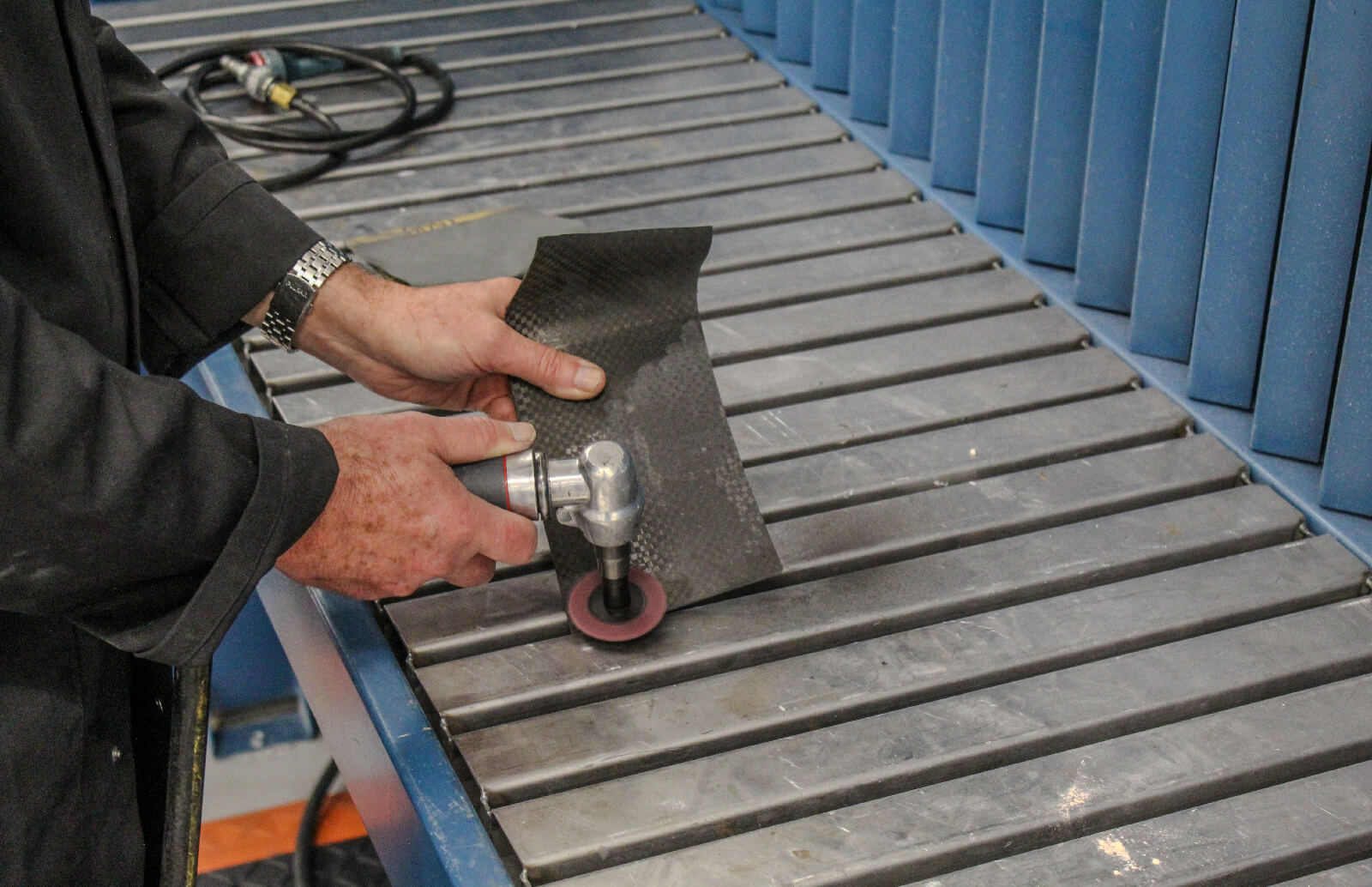
From cutting and sanding to grinding, milling and polishing, many composite manufacturing processes create dust. Some of it may be visible, while the finest particles can remain suspended in the air or settle on surfaces throughout a facility. But not all composite dust presents the same risk.
Fibreglass (GRP), carbon fibre, aramid, resin and core materials such as foam and honeycomb cores can all generate dust during manufacturing processes. Depending on the material and process, exposure can cause respiratory irritation, skin problems and other health effects. Some composite dusts may also be combustible, creating an additional risk of fire or explosion.
Understanding the type of composite dust being generated, the risks it presents and how it can be effectively controlled is an important part of maintaining a safe working environment.
What is composite dust?
Composite materials are made by combining two or more different materials to create a product with specific properties, such as:
- High strength
- Weight reduction
- Durability
- Corrosion resistance
- Heat resistance (in specific formulations)
They are widely used across industries including defence, aerospace, automotive, marine, construction and manufacturing.
Working with composites can generate dust containing different materials, depending on the product and manufacturing process.
Examples include:
- Fibreglass (GRP) dust – produced when cutting, sanding or machining glass fibre-reinforced materials.
- Carbon fibre dust – generated during machining, trimming, sanding and finishing of carbon fibre composites.
- Aramid dust – produced when cutting, machining, sanding or otherwise processing aramid fibre composites.
- Resin dust – generated when machining, sanding or finishing composite materials containing resin systems.
- Core material dust – produced when cutting, shaping or machining materials such as foam and honeycomb cores used within composite structures.
The risks associated with each type of composite dust can vary considerably, which is why understanding the material being processed is an important first step in designing appropriate controls.
Why is composite dust a workplace hazard?
The mainconcern with many composite dusts is exposure through inhalation. Fine particles can enter the respiratory system and, depending on their size and composition, can travel deep into the lungs. Repeated or prolonged exposure can contribute to occupational respiratory problems and other health issues.
The Control of Substances Hazardous to Health (COSHH) Regulations are the first step when managing exposure to composite dust. COSHH requires employers to assess the risks associated with hazardous substances and put appropriate measures in place to prevent or adequately control exposure. Effective containment, extraction and housekeeping can all form part of this approach.
Fibreglass and other fibres can irritate the skin, eyes and respiratory system, and repeated exposure can lead to skin sensitisation. Carbon fibre dust can also cause mechanical irritation, as the fine, rigid fibres can penetrate skin and cause discomfort or a rash. The potential risks will depend on the materials being processed, the composition of the composite and the manufacturing process.
There is another risk that can be easier to overlook – dust can spread well beyond the point where it is generated. Without effective extraction, particles can travel through the wider working environment, settle on machinery and surfaces and potentially enter workers' breathing zones. This is why controlling composite dust at source is so important.
Not all composite dust is the same
The type, size and concentration of dust particles all influence the risk. Larger particles may settle relatively quickly, while finer particles can remain airborne for longer and penetrate deeper into the respiratory system. A process that appears to create relatively little visible dust can therefore still generate significant airborne exposure.
The material itself also matters. A dust may primarily present a respiratory health risk, while another could also be combustible. Some composite materials can present a different hazard when processed into fine particles. This means composite dust control should not be approached as a one-size-fits-all exercise. The material, process, particle characteristics and working environment all need to be considered.
Combustible composite dust: when dust becomes an explosion risk
Some composite dusts can ignite and, under the right conditions, cause an explosion.
For a dust explosion to occur, combustible dust needs to be dispersed in the air at a suitable concentration, alongside oxygen and an ignition source. Fine particles present a particular concern for two reasons: their increased surface area makes them more readily ignitable, and they stay airborne more easily, making it more likely they'll form a dispersed cloud at a concentration capable of igniting.
Dust can accumulate in places that are easy to overlook, including:
- Around and inside machinery
- On ledges and other horizontal surfaces
- In ductwork
- In roof spaces and rafters
- Around extraction equipment
- Inside suspended ceilings and other enclosed areas
If an initial explosion occurs, it can disturb accumulated dust elsewhere in a facility and create the conditions for a secondary explosion. This can make the consequences significantly more serious.
Alongside COSHH Regulations, where combustible composite dust may be present, employers need to understand the risks and put appropriate additional controls in place. In the UK, this falls under the Dangerous Substances and Explosive Atmospheres Regulations 2002 (DSEAR). Where an explosive atmosphere may occur, the relevant areas may also need to be classified into hazardous zones.
How can composite dust exposure be controlled?
Effective composite dust control starts with understanding where dust is generated and how it behaves within the working environment.
The hierarchy of control should be considered when assessing exposure, with the aim of preventing or reducing exposure rather than relying solely on personal protective equipment (PPE).
1. Capture dust at source
Where possible, dust should be captured as close as possible to the point where it is generated. Source extraction can prevent particles from spreading into the wider working environment and reaching workers' breathing zones.
Depending on the application, this could include extraction arms, on-tool extraction or other local exhaust ventilation systems. For processes such as cutting, grinding and sanding, on-tool extraction can be particularly effective because dust is captured directly from the tool rather than being allowed to disperse around the workspace.
2. Use appropriate filtration and collection
Captured dust needs to be safely transported, filtered and collected. The right dust collection system will depend on factors including the type and volume of composite dust, particle size, process, airflow requirements and whether the dust is combustible.
For larger composite manufacturing applications, systems can incorporate dust collectors, filtration, fans, ducting and automated controls to manage dust efficiently.
3. Keep the working environment clean
Even an effective extraction system cannot prevent every particle from settling somewhere in a facility. Good housekeeping therefore remains an important part of composite dust control.
Dust should be removed using suitable cleaning methods and equipment rather than allowing it to accumulate on surfaces, machinery or difficult-to-reach areas. Insufficient extraction and dust accumulation can also affect machinery over time, contributing to wear and increased maintenance requirements and potentially leading to unplanned downtime. For manufacturers, this can mean disruption to production and lost revenue. Where combustible composite dust is present, controlling accumulation is particularly important because settled dust can contribute to the risk of fire or explosion.
4. Consider the wider working environment
Source extraction should be the first line of defence, but it may not capture every airborne particle. General air purification can complement source extraction by helping to reduce background concentrations of fine particles that escape into the wider workspace.
This can be particularly useful in larger production environments where multiple composite manufacturing processes are taking place.
5. Use PPE where appropriate
Respiratory protective equipment (RPE), protective clothing and other PPE can provide an additional layer of protection where risks remain after other controls have been implemented.
However, PPE should not be viewed as a replacement for effective engineering controls such as local exhaust ventilation. The appropriate level of protection will depend on the material, exposure risk and findings of the workplace risk assessment.
How can manufacturers reduce combustible composite dust risks?
Where a composite dust has been identified as combustible, additional controls may be needed.
These can include:
- Identifying and controlling potential ignition sources
- Preventing dust from accumulating
- Using appropriately designed dust extraction and collection systems
- Assessing whether processes can be modified to reduce the production of fine dust
- Using equipment suitable for the hazardous area
- Preventing an explosion from propagating through connected ductwork or equipment
- Ensuring employees understand the risks and follow appropriate housekeeping procedures
A key consideration is that dust extraction equipment itself needs to be suitable for the material and environment. For sites where combustible composite dust is present, equipment may need to meet relevant ATEX requirements, alongside the wider requirements of DSEAR.
Getting composite dust control right
There is no single extraction system that works for every type of composite dust. A system designed for one application may not be appropriate for another, particularly where dust characteristics, production volumes or combustible properties differ. That is why dust control should start with a thorough assessment of the material and process.
At Nederman, we have extensive experience helping manufacturers control dust across a wide range of composite machining applications. Our solutions include extraction arms, on-tool extraction, industrial vacuum cleaners, dust collectors, filtration systems and air purification, alongside the ducting, fans and control systems needed to create an effective dust management system. For combustible composite dust applications, Nederman also provides ATEX-certified solutions including dust collectors, industrial vacuum cleaners and explosion isolation flap valves, helping businesses address the risks identified through their DSEAR assessments.
Not sure what type of composite dust you're dealing with?
Understanding the characteristics of the dust generated by your process, including whether it is combustible, is an important first step in selecting the right controls.
Nederman offers a free laboratory dust analysis to indicate whether dust from your facility presents a combustion risk and help identify the next steps towards safer dust collection.
With long-standing expertise in dust extraction and combustible dust control, Nederman can help you assess your requirements and identify a solution designed around your specific application.
If you're concerned about composite dust in your facility, speak to Nederman's clean air experts to discuss your requirements.