- Home
Nederman SAVE- Airflow control
Loading component...
Loading component...
Loading component...
Loading component...
Loading component...
Loading component...
Loading component...

Download our SAVE brochure
Download
Frequently Asked Questions about Nederman SAVE
Q: Is Nederman SAVE for new dust collection systems or can it be a retrofit on an existing system?
A: Nederman SAVE can be used on new and most existing systems. For existing systems, SAVE is primarily for optimizing performance including energy savings. For new systems, in addition to the energy savings, the filter can be sized for actual airflow potentially reducing footprint and initial cost.
Q: Can Nederman SAVE be used on other manufacturer’s dust collectors?
A: Yes. SAVE can be implemented on most dust collection systems regardless of who the manufacturer is. Our sales engineers can assess the existing ducting systems, controls, fan and filter and confirm.
Q: Is a Nederman Insight subscription required to track energy savings?
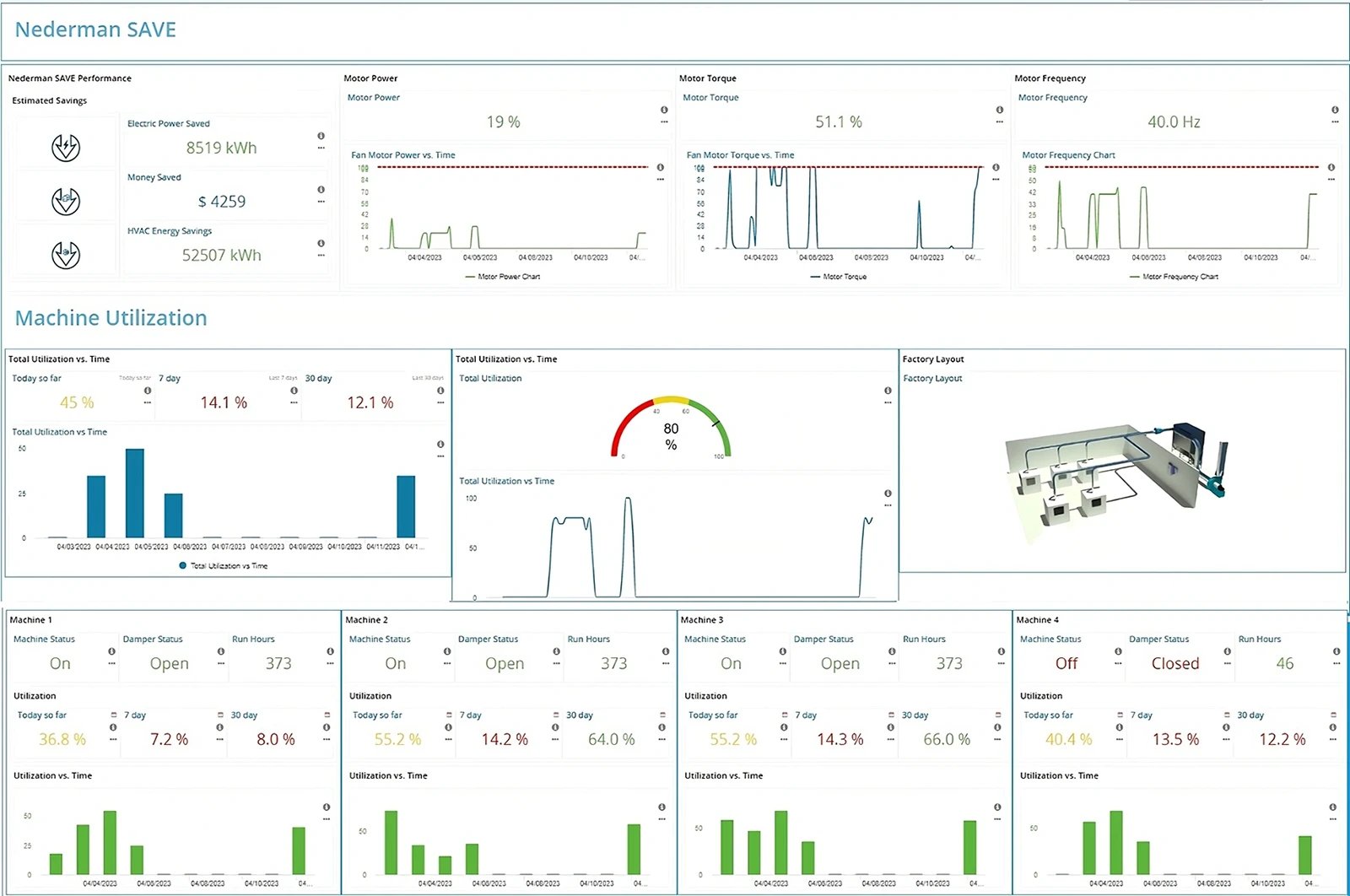
A: Energy savings and data is tracked and accessible via the local SAVE Controller so it is not required. However, Nederman Insight provides an easy to use dashboard that can be accessed remotely to track the energy savings and also the machine utilisation of the process. If you already have a connected Nederman SmartFilter, SAVE monitoring can be added to this subscription.
Q: How much energy will I really save?
A: Almost every dust collection system in the world is unique so actual energy savings is dependent on a variety of factors including the process, duct design, motor efficiency and other factors. Average savings for most applications is around 60% and up to 70% is possible. This percentage is just the electrical power consumed by the motors and does not factor in other cost savings related to HVAC, reduced component wear and tear or extended filter life.
Q: Does Nederman SAVE comply with combustible dust regulations?
A: Yes. SAVE complies with ATEX and NFPA recommendations for active monitoring of combustible dust applications. SAVE improves the system’s ability to safely handle combustible dust by monitoring the airflow, pressure and transport velocity in each duct branch. Regular system flushes with all gates open further improve safety over conventional controls.
Q: Is SAVE only for large complex dust collection systems or can it also benefit small systems?
A: SAVE can be used on large or small systems on processes vary in operation and do not constantly required extraction. Generally speaking, systems that have a 15kW (20 HP) motor or higher are the most common applications for SAVE.
Q: What is the expected return on investment from Nederman SAVE?
A: The ROI for SAVE will vary based on the application and process however the typical payback resulting from the energy reduction in the dust collection fan motors is less than two years. Additional savings related to HVAC, maintenance and extended component life can further improve the ROI.