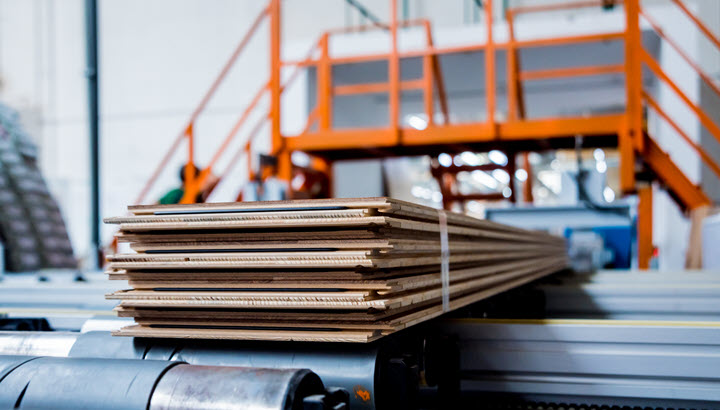
Educational wood shops operate differently from most commercial woodworking facilities. Equipment use may change by class period, several machines may share a central system, and the collector often must fit within a campus where space, noise and available utilities are important considerations. Schools also need equipment that facility personnel can operate and maintain without unnecessary complexity.
For engineering firms and facility planners, the challenge is not simply choosing a dust collector. The machines, source-capture connections, ductwork, fan, controls, material discharge and combustible-dust protection must function as a coordinated system.
Design the system around the educational facility
Every school wood shop has a different combination of equipment, operating schedules and facility constraints. A middle school classroom may have different needs than a high school career and technical education program or a technical college supporting multiple woodworking disciplines.
The design team should understand the equipment being connected, expected simultaneous use, source-capture requirements and the overall duct arrangement. Available installation space, electrical service, waste volume, maintenance access, sound-sensitive areas and possible future expansion should also be evaluated.
These considerations do not need to make the project overly complicated, but they make a generic, one-size-fits-all approach difficult. Collector selection should be coordinated with the rest of the system so that airflow, controls and material handling support how the shop will actually operate.
A flexible wood dust collection solution for schools
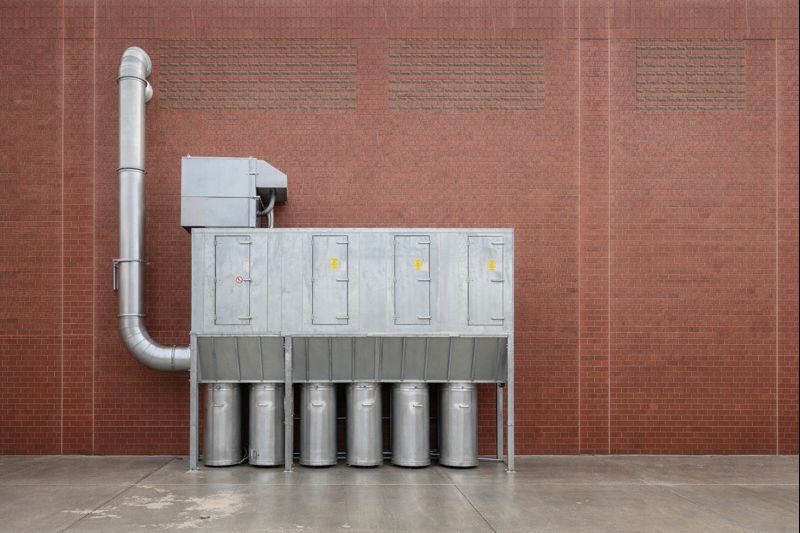
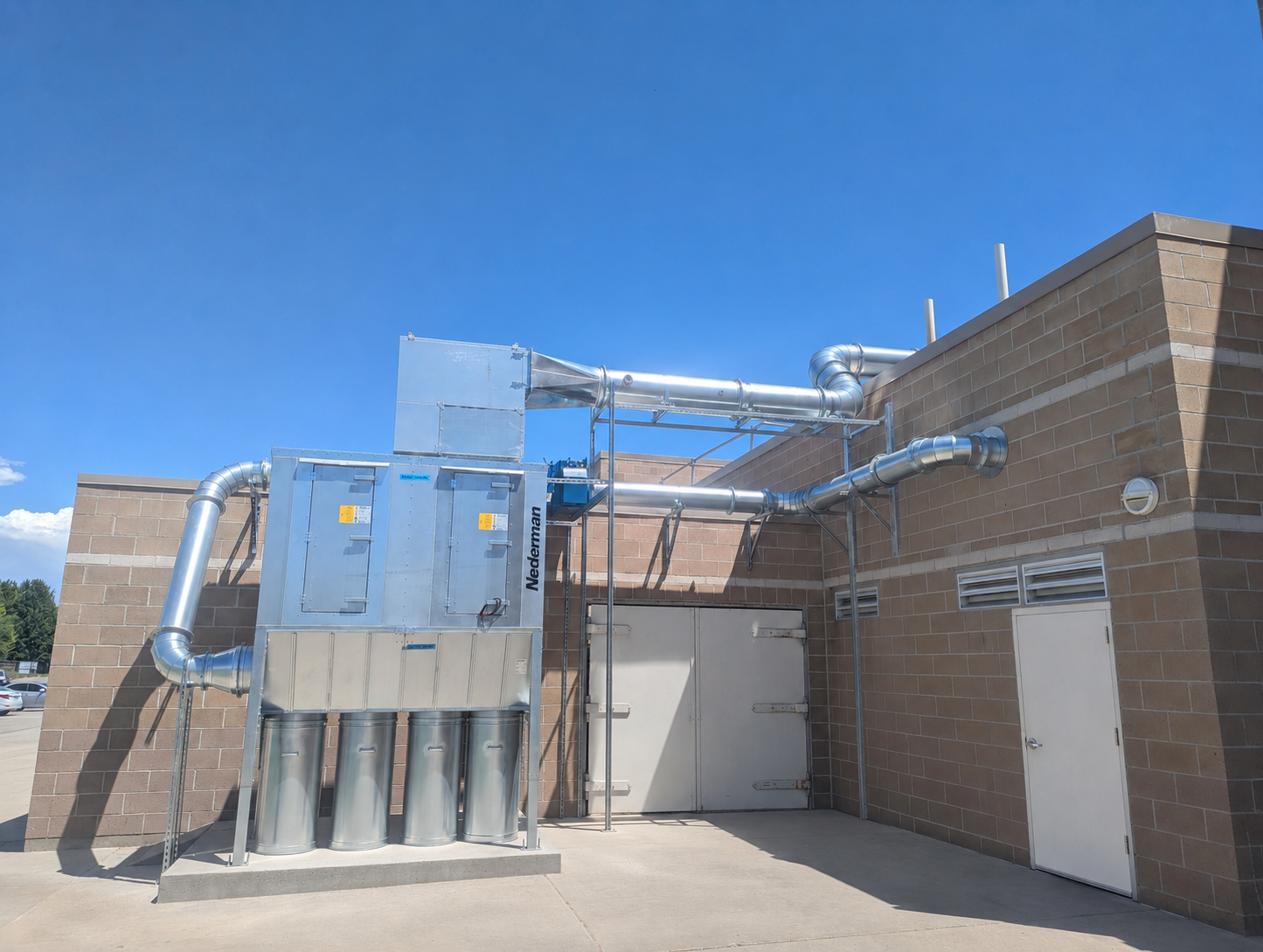
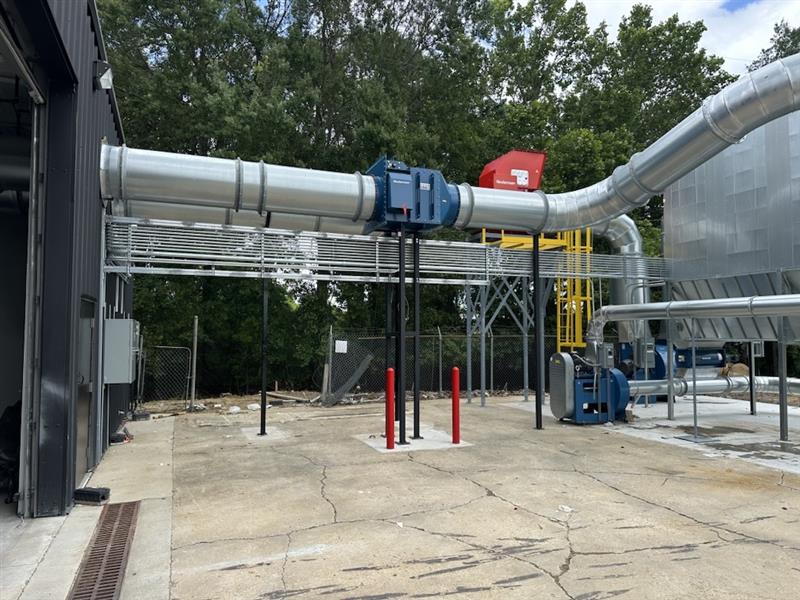
The Nederman LBRS, formerly known as the NFPZ is a shaker baghouse dust collector designed for small to mid-sized woodworking facilities, including educational sites and woodworking trade schools.
The LBRS provides a configurable platform that can be adapted to the needs of the facility. Multiple collector sizes, fan arrangements, controls and material-discharge options allow the design team to address different layouts, operating patterns and waste volumes.
For smaller programs, barrel collection may provide a straightforward waste-handling approach. A mobile tote bin can offer greater capacity and easier movement, while a rotary valve can transfer material into a larger container or downstream handling system.
Integral fan-mounting options can reduce the overall installed footprint when outdoor space is limited. Fans, silencers, controls, monitoring options and Nordfab Quick-Fit ductwork can also be incorporated as part of the complete system.
The objective is not to fit every school into the same collector configuration. It is to select and arrange the system around the equipment, facility and way the program operates.
Simplify operation without compressed air
Compressed air is not always available near the proposed collector location at a school. Extending compressed-air piping can add installation cost, create another utility to maintain and increase overall system complexity.
The LBRS uses an automatic shaker-cleaning system that operates after the extraction fan stops. The filter bags are cleaned offline without compressed air.
This can simplify installation and support the intermittent operating schedules common in educational wood shops. It also reduces the supporting infrastructure required around the collector.
The system is not maintenance-free. Filters, fans, cleaning mechanisms, waste containers, controls and safety devices should be included in a documented inspection and maintenance program. The selected arrangement should make these components accessible to the personnel responsible for maintaining them.
Consider footprint, sound and waste handling
Collector placement can be more challenging on a school campus than at an industrial facility. The available location may be close to classrooms, offices, athletic areas, walkways or neighboring properties.
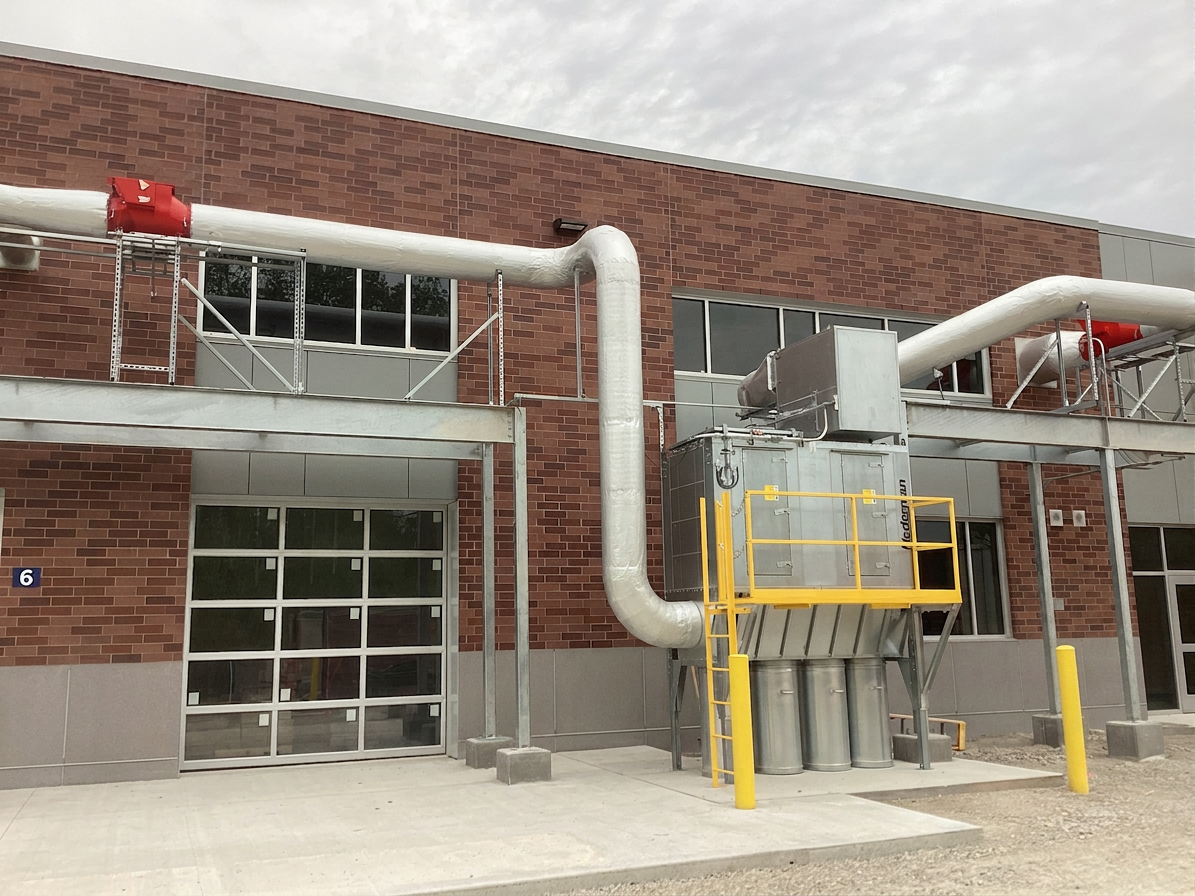
Engineers should evaluate collector placement, fan selection, duct routing and optional sound attenuation together. Integral fan mounting may help reduce the footprint, while an appropriate fan and silencer arrangement can help address sound-sensitive locations.
Waste handling should also reflect the school’s operating capabilities. The container should be easy to inspect and accessible for emptying or removal. Facility personnel should understand who is responsible for checking the container, how frequently it is expected to fill and how collected material will be handled.
Cold-weather projects require additional planning. Exhausting conditioned air can affect building pressure and heating demand, while returning filtered air requires an appropriate system design, monitoring strategy and review of applicable requirements.
Address combustible wood dust as a complete-system risk
Fine wood dust can present fire and explosion hazards under certain conditions. A school may operate fewer hours than a commercial plant, but intermittent use does not eliminate the need to evaluate combustible-dust risks.
The safety strategy should consider the complete system, including:
Collector location
Explosion protection
Explosion isolation
Duct routing
Grounding and bonding
Material discharge
Potential ignition sources
Housekeeping
Inspection and maintenance
Spark detection, suppression or other safeguards may also be appropriate depending on the processes, dust characteristics and identified risks.
In the United States, the design should consider NFPA 660 along with applicable building, fire, electrical and occupational-safety requirements. Canadian projects may be subject to provincial, territorial and local requirements that vary by location.
No collector or individual safety component automatically makes an installation compliant. The protection strategy must be developed for the specific application and reviewed by the appropriate qualified professionals and authority having jurisdiction.
A smoother path toward compliance
For engineering firms that do not design wood dust collection systems every day, identifying and coordinating all the applicable requirements can be a significant project challenge. Source capture, airflow, ductwork, fan performance, controls, explosion protection, isolation and material discharge are closely connected, and decisions in one area can affect the rest of the system.
Working with an experienced, one-stop system supplier can make the path toward compliance smoother. Rather than asking the engineering firm to coordinate separate equipment manufacturers and determine how each component will interface, Nederman can work with the project team to develop a complete, integrated system.
Depending on the project scope, Nederman can design, manufacture or supply:
Dust collectors
Fans
Ductwork
Controls
Explosion-protection and isolation devices
Material-discharge and waste-handling equipment
Monitoring components
Nederman can also support system planning, project management, installation, commissioning and ongoing service.
When a system is assembled through several manufacturers or representatives, the engineering team may need to manage additional interfaces involving airflow, controls, component compatibility, documentation and safety-system responsibilities. A single-source approach can streamline communication, reduce coordination points and provide clearer accountability across the project.
The engineer of record and authority having jurisdiction remain essential to final design review and approval. Nederman’s role is to bring specialized wood dust collection experience to the process, help interpret the application requirements and support the engineering team in developing a coordinated system designed to address the applicable requirements.
Involve Nederman early in the project
Early collaboration can help identify design assumptions, facility constraints and safety requirements before the project is fully specified. It can also reduce the risk of discovering late in the process that the collector, ductwork, fan, controls or protection devices do not work together as intended.
Whether the project involves a new career and technical education facility, renovation of an existing school wood shop, machinery additions, replacement of an aging NFPZ collector or combustible-dust safety improvements, Nederman can help evaluate the application and develop a practical system the school can operate and maintain.