- Home
- Applications
Combustible Dust
Loading component...
Loading component...
Loading...

Combustible dust is one of the most serious risks in UK manufacturing environments. Reduce the danger of dust and gas explosions with ATEX-certified solutions. Dust collectors, extraction arms, industrial vacuum cleaners and explosion isolation flap valves designed to help you meet your DSEAR obligations.
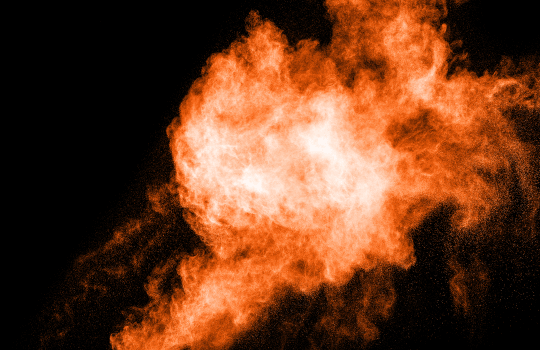
One of the most serious risks caused by dust in manufacturing environments is combustible dust. When this dust comes into contact with the right concentration of oxygen, an explosion can occur. A single ignition source is all it takes to trigger one.
The explosion may not stay contained to the immediate area. Dust explosions can spread from a small initial blast near the ignition source to the rest of the facility. The first explosion stirs up dust elsewhere in the building, which then ignites in turn. This secondary explosion can be far more destructive than the first, injuring or killing workers and causing serious damage to plant and premises.
Combustible dust, also known as explosive dust, is a by-product of manufacturing processes involving combustible raw materials. It is any fine material capable of catching fire and exploding when mixed with air. Many materials can become combustible dust under the right conditions, including:
Combustible dust particles are practically invisible to the human eye, yet they present a deadly hazard across many UK workplaces and industries. Under the right conditions the dust can become explosive, potentially killing or injuring workers and destroying machinery or entire facilities. Explosive or potentially explosive atmospheres can also arise where flammable gases or vapours from chemicals or petroleum products are present.
Dust can build up almost anywhere in a workplace, inside, on and around machinery and finished items, as well as in rafters, roof spaces, suspended ceilings and ductwork, which are common trouble spots precisely because they're remote and hard to reach.
Under the Dangerous Substances and Explosive Atmospheres Regulations 2002 (DSEAR), employers have a legal duty to carry out a risk assessment of any work activity involving dangerous substances, including combustible dust, identifying where dust is generated, whether it's explosive, and what controls are needed. Where an explosive atmosphere may occur, the site (or relevant area) must also be classified into hazardous zones in line with DSEAR and the associated Approved Code of Practice.
DSEAR 2002 is the primary UK legislation governing combustible dust and explosive atmospheres, enforced by the Health and Safety Executive (HSE). It implements the requirements of the EU ATEX Workplace Directive (99/92/EC) into UK law and sits alongside the Equipment and Protective Systems Intended for Use in Potentially Explosive Atmospheres Regulations 2016, which cover ATEX-rated equipment placed on the GB market.
Practical guidance on complying with DSEAR is set out in HSE's Approved Code of Practice L138 – Dangerous Substances and Explosive Atmospheres, which covers risk assessment, hazardous area classification and explosion protection documentation.
Together, these regulations make a range of technical and organisational measures mandatory for any site handling combustible dust, from hazardous area classification through to selecting correctly rated equipment. HSE also publishes sector-specific guidance, including for woodworking, food production and other dust-generating industries — to help employers meet their obligations in practice.
A few concrete ways to reduce the build-up and spread of combustible dust, and the risk of a fatal explosion:
Nederman offers safe, reliable solutions for handling combustible dust and gases in UK facilities. Based on your risk assessment, we recommend the right equipment for your application — designed to comply with ATEX and DSEAR requirements.
SAFETY - Protect people, production and facility
EXPERTISE - Combustible dust control specialists with long-standing experience, and Nederman representation on relevant ATEX and international standards committees
TRUST - A leading manufacturer of both dust collectors and explosion safety devices, with a wide range of explosion isolation flap valves for all applications
COMPLIANCE - ATEX-certified dust collectors, extraction arms, industrial vacuum cleaners and explosion isolation flap valves
Nederman is a leading manufacturer of dust collectors with a proven track record of controlling dust and mitigating fire and explosion risk. We can help you create a safe, compliant working environment by recommending suitable equipment and routines, based on your risk assessment and DSEAR/ATEX compliance requirements.
Contact our combustible dust experts